
Cast of Characters
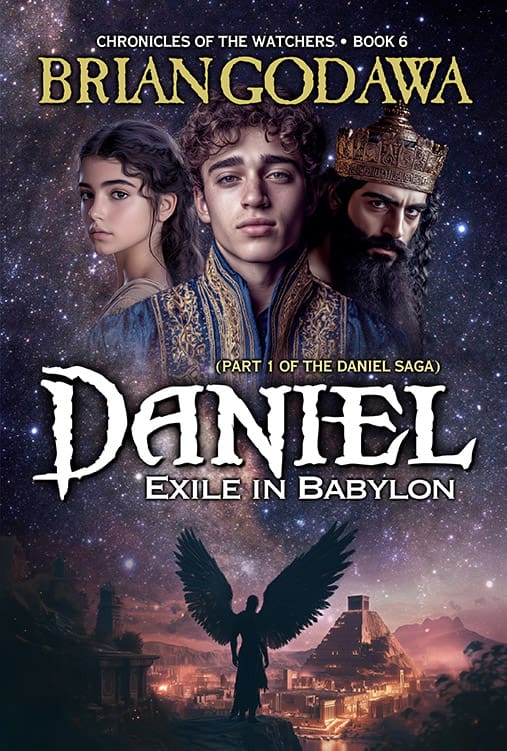
Part 1 of 3. The supernatural story of the biblical Daniel. When he is deported to Babylon at a young age, he is taken from his royal family and his first love, Ariela. Now he must survive his magi training in Babylon and remain obedient to God. Images created by Brian Godawa and Cam Harless.
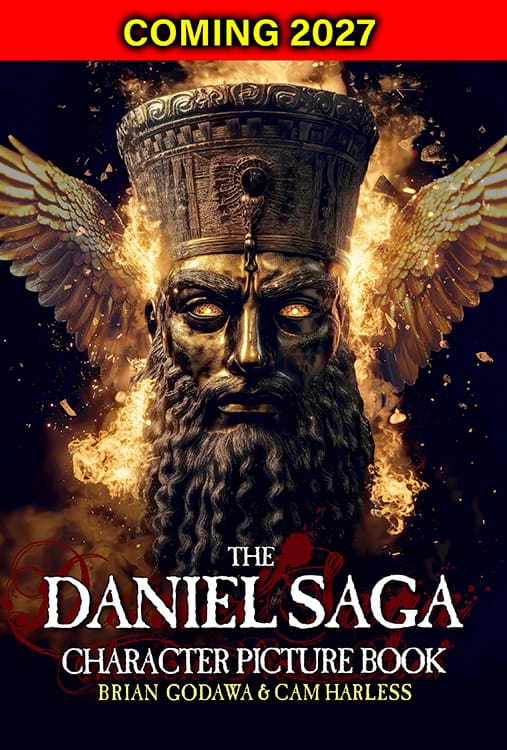
To see more character pictures for this novel that are not included here, get the book, The Daniel Trilogy Character Picture Book, available on Amazon 2027.
Daniel (Belteshazzar)

His Babylonian name is Belteshazzar. A noble teen ripped from Jerusalem and forced into Babylon’s elite training—brilliant, principled, and painfully human. He’s caught between empire-grade temptation and covenant-level obedience, while his heart stays tethered to his childhood sweetheart he can’t protect. God uses Daniel for his purposes, but will Daniel come out damaged and loveless?
Ariela

Daniel’s servant-girl friend turned secret love—intelligent, brave, and stubbornly hopeful in a world built to crush lowly people. She’s a “lioness cub” who learns letters in the shadows and refuses to let fate dictate her worth. When exile tears them apart, how far will she go to keep Daniel’s hope—and her own—alive?
Mishael (Meshach)

His Babylonian name is Meshach. The strong, relentlessly upbeat friend who fights like a guardian and smiles like a man refusing despair. He’s loyal, courageous, and built for protecting others when brains aren’t enough. But when the cost of faith becomes physical, will his strength be enough to keep Daniel standing?
Azariah (Abednego)

His Babylonian name is Abednego. A sharp-minded, proud, and fiercely protective—especially of his brother Hananiah. He’s the kind of young man who argues with precision, insults with style, and loves with loyalty he barely admits. Will his strength of will keep the brothers united… or will Babylon exploit the cracks in his pride?
Hananiah (Shadrach)

His Babylonian name is Shadrach. A Jewish captive whose neuro-divergent mind runs on patterns and precision—gifted, fragile, and often overwhelmed by chaos and crowds. He sees what others miss, remembers what others forget, and becomes a quiet powerhouse in the group’s survival. But in Babylon, will his unique mind save them… or make him a target they can’t protect?
Ebed-melech

The Ethiopian royal chamberlain, moves through palace corridors with the quiet authority of a man who knows every door, every secret, and every price. He is calm, protective, and more loyal than the politics around him deserve. In a world where servants are invisible—who is he really serving, and how far will he go to keep Daniel’s people alive?
Michael

The king of Judah is a decadent, arrogant ruler who treats Yahweh’s warnings like background noise and treats prophets like pests. He’s politically calculating, spiritually compromised, and convinced the temple itself makes him untouchable. When he burns Jeremiah’s words like trash, is he defying a man… or signing Judah’s death warrant?
Gabriel

A dark-skinned, heavenly-armored messenger. Compassionate, intense, and always present at the edge of Daniel’s dreams. He doesn’t just deliver information; he delivers destiny. Is Gabriel merely watching Daniel… or preparing him for something that will shake kingdoms?
Uriel

Blonde, small, deadly, and annoyingly witty—a dual-sword fighter whose levity masks razor competence. He’s the kind of warrior who jokes because he’s seen too much not to. When the unseen war turns hot, will Uriel’s “lightness” be the blade that saves Daniel?
King Nebuchadnezzar

Crown prince turned king, Nebuchadnezzar II is a towering force of intellect and ego—strategic, impatient, and addicted to greatness. He believes he’s building “New Babylon,” but he’s also—unknown to him—an instrument in Yahweh’s sentence against Judah. When a man thinks he rules the world, what happens when heaven starts writing back?
Queen Amytis

Nebuchadnezzar’s Median wife—elegant, perceptive, and one of the few people willing to challenge the king’s pride without getting crushed. She brings a rare strain of conscience into a palace built on power and fear. Is she merely the king’s comfort… or the one voice that could avert catastrophe?
Nabushumalishir

Nebuchadnezzar’s younger brother is soft-bodied, clever, and simmering with envy beneath a veneer of courtly restraint. He’s the kind of man who hates in whispers and schemes in ledgers. When the throne becomes vulnerable, will he remain the “lesser brother”—or become Babylon’s most lethal threat?
Arioch

“The Butcher.” Nebuchadnezzar’s Captain of the Guard is a lethal professional who treats violence as policy execution. He’s intense, loyal, and terrifyingly efficient in the way only the king’s favorite blade can be. When Arioch walks into a room, who will leave it alive?
Ashpenaz

Babylon’s chief overseer—an efficient eunuch administrator who selects hostages, runs the school, and makes mercy feel like a calculated transaction. He is disciplined, observant, and terrifyingly practical. Will he become Daniel’s unlikelyprotector—or the man who delivers him to the knife when he no longer performs?
Shukura

The Ethiopian steward assigned to Daniel’s table in the House of the Tablet. He is calm, authoritative, and unsettlingly protective. He appears to be a mere handler of students, yet he moves like someone with hidden rank and intentions. Is he Daniel’s lifeline… or the most dangerous secret in Babylon?
Marduk-mubashu (Mubashu)

High priest of Esagila, wears sanctity like jewelry—polished, ambitious, and dangerously adept at turning ritual into power. He smiles like a servant of the gods while plotting like a kingmaker. When Daniel’s integrity threatens Babylon’s religious machine, will Mubashu crush him—or will his own schemes ignite the furnace meant for others?
Marduk-zakiru (Zakiru)

The albino son of the high priest, is privilege with a whip—cold, cruel, and eager to prove dominance over captive boys who can’t fight back. He’s the kind of bully who doesn’t just want Daniel to fail; he wants Daniel to become a eunuch. If Zakiru can control the classroom, can he control Daniel’s destiny—and what happens when Daniel refuses to break?
Anu-abua

Chief tupsharru astrologer, reads the sky like a sacred courtroom transcript—soft-bodied, theatrical, and confident that stars can crown kings and doom them. He is a bureaucrat of the heavens, turning eclipses into policy and “omens” into leverage. Is he merely a devout interpreter… or a man who can bend an empire by controlling the tablets?
Kudurru

An Arab baru priest of liver-divination, treats entrails like a weaponized truth—blunt, impatient, and convinced the gods speak clearest through blood. He can pronounce death over kings with a few “discoveries” on a steaming organ. But is he reading fate… or manufacturing it?
Watchers of Babylon
Marduk – Prince of Babylon

Prince of Babylon in the unseen realm. Power-drunk and vengeful—convinced the world exists to validate his kingship. He’s a Watcher-god who feeds on conquest and dreams of owning Yahweh’s house. If Daniel becomes the spark of resistance, what devastation will Marduk bring?
Nabu

Son of Marduk, the god of scribes. He is refined, calculating, and obsessed with controlling the story that controls the world. He wields words like weapons and treats knowledge as domination. When Daniel steps into Babylon’s education machine, is he walking into Nabu’s trap?
Ea

God of the watery Abyss and magic. A trickster force—cunning, manipulative, and dangerous precisely because he doesn’t fight fair. He represents the occult edge of Babylon’s power, the kind that breaks protections and turns chaos into strategy. If Yahweh alone rules the deep, how long can Ea keep pretending otherwise?
Ishtar

The “Queen of Heaven.” She is seduction and slaughter wrapped in brilliance—beautiful, ruthless, and perpetually hungry for power. She can play ally, enemy, victim, and predator without changing her smile. When she turns her gaze toward Judah and Babylon alike, who survives her favor?
Mushmahu

Babylon’s name for Leviathan. It erupts from the Abyss as seven-headed chaos, undoing magic and swallowing defenses. It’s not merely a monster; it’s a theological statement: when chaos is unleashed, cities fall. And if Babylon can summon chaos at will… who can stop what comes next?
Mushushu

Mushushu is Marduk’s signature dragon—hybrid guardian spirit in the unseen realm, a living emblem of Babylon’s dominance. It lurks at the edges of Daniel’s new life like a threat that doesn’t need words.
Watchers of Canaan
Baal Prince of Canaan

Storm god and Prince of Canaan. His muscular intimidation and ancient entitlement is used to being worshiped and feared. He stands like a warlord in the unseen realm, daring Yahweh’s servants to challenge him. But when Babylon rises, will Baal remain king of his hill… or become Marduk’s bitch?
Asherah

Asherah is the mother-goddess façade—matronly and manipulative, the spiritual symbol of Israel’s infidelity. She sells comfort, fertility, and compromise at the cost of covenant loyalty. If she can corrupt worship in Jerusalem itself, what hope does Daniel have in Babylon?
Molech

The Canaanite underworld god of child sacrifice. Grotesque, blood-soaked, and shameless. He thrives where fear turns parents into betrayers and worship becomes violence. When Judah’s sins cry out, how long before Yahweh answers?
Astarte

“Queen of Heaven” in Judah’s idolatry. She is seductive power wearing a crown—cold-eyed, defiant, and strengthened by stolen worship. She glories in humiliating Yahweh’s people and taunting His angels. When judgment comes, will she retreat… or double down?
Etemenanki

Scythians


Babylon’s hired chaos—horse-archer barbarians who turn war into terror and bodies into trophies. They are efficient, savage, and used precisely because no one wants to be near what they do. When a king unleashes them, what part of the world remains human?

Site Links
Quicks Links
© 2026, Brian Godawa. All Rights Reserved.
