A Wrinkle in Time: Why Does Hollywood Keep Raping Christian Stories?
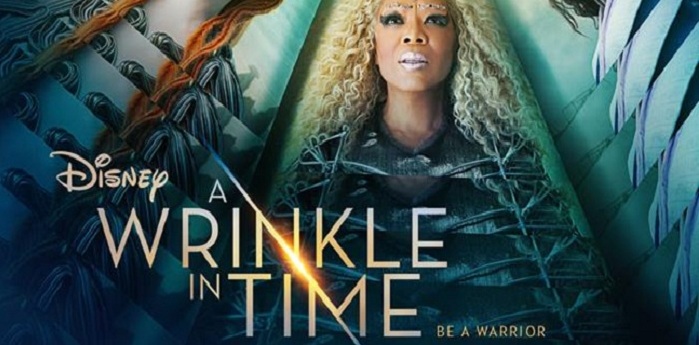
I guess A Wrinkle in Time can now officially be a part of the #MeToo movement of Hollywood victims.
And before you start “outraging” about the metaphor, I want to say that it actually fits perfectly. Rape is the forced penetration, and often insemination, of an unwilling person.
So too is the act of taking a Christian classic and deliberately eviscerating it of its meaning, and then inseminating it with the seed of a hostile alien worldview.
It’s an act of narrative violence.
But that’s how many secular and pagan storytellers roll. This has been a problem for a long time. In my book, Hollywood Worldviews, I list movies that were made through the years where the original stories were rooted in a Christian worldview (many of them, true stories), but were either completely secularized and shorn of their Christian elements or were so minimalized as to undermine the Christian meaning with a humanistic spin.
That’s called subversion. You retell your opponent’s story through your own view and thereby take control of the story. It’s one of those few things that postmodernism is correct about. If you control the narrative, you control the meaning.
Here are some movies through the years that subvert the Christian faith through suppression or elimination of it: The Pursuit of Happyness, Pocahontas, The New World, Hotel Rwanda, Becoming Jane, Anna and the King, Hard Ball, Walk the Line, Unbroken, The Vow, The Finest Hours, Hidden Figures.
And that’s not to mention movies, like Noah, Exodus: Gods and Kings, Last Days in the Desert, where atheists completely subvert Biblical stories and the Biblical God with an idol of nature or atheist demythologizing.
Most of these movies above are true stories, whose characters are driven by their faith to such an extent that the deletion or suppression of that motivation is a violation, not just of the story, but of the human being.
Now Madeleine L’Engle can join those ranks.
And if her estate was willing, well then, they are complicit in the crime.
A Caveat
To be fair, there are still stories that get through the gauntlet of anti-Christian bias in Hollywood. So it’s not monolithic, which is what I always try to remind the cultural anorexics who throw the baby out with the bathwater.
For instance, here are some fantastic examples of Hollywood movies through the years that keep the Christian worldview as a significant aspect of the story: Faster, Machine Gun Preacher, The Conjuring, Les Miserables, Deliver Us From Evil, Miracles from Heaven, Risen, Hacksaw Ridge, Ben Hur (2016), The Young Messiah, The Book of Eli, I am Legend, Man on Fire, Gran Torino, Rambo, Apocalypto, Signs. And there are plenty more.
But the tendency is that the more big budget the story is, the more likely it will be stripped of its Christian ideas because of the bigotry of those in power. I’ve known some of these very situations. The executive will say they need to “tone down” the religion in it or “make it more inclusive,” for a wider market. But what is so ironic is that the widest market domestically is actually a positive Christian faith.
And don’t forget, The Passion of the Christ was WORLDWIDE, baby.
A Waste of Time
If there is anything good about the film, it would be its elevation of family love, adoption, and friendship. The family at the center of the film is racially integrated and adoptive. That’s a great thing to stand for in our world of segregation through identity politics.
But unfortunately, this is not saying much, because the storytelling is so boring, talkie, and insipid that you watch scenes where they are trying to communicate relatively good truths (like the love of a family) but you don’t believe any of it because of the trite dialogue and mentalized struggles.
Characters keep saying things about their love for one another or their convictions, but it falls flat like some kind of psychoanalytical session of the “talking cure.”
The movie starts with a montage of family love, in order to get that part out of the way, but in so doing, trivializes the real human connection that we need to be able to even care about these characters. And we really don’t care much about them.
There are scenes that go nowhere, scenes that serve little purpose, and scenes that look like a television Dr. Who story where they jump around to different “rooms” or locations and talk talk talk.
And the movie has an obvious agenda of multicultural hiring of its actors, which also lends more weight to the lack of integrity and authenticity that it promotes. It’s a world that doesn’t really look like the world that we live in, at least in the West, which is where this movie appears to take place. That doesn’t bother me that much because I want to see more people of color in more stories. But affirmative action is intrinsically racist and fascist, which is the medicine that is worse than the disease. That’s a Frankenstein you don’t want to try to save the world with.
Where Did all the Christianity Go?
I’ll confess, I haven’t read the book. So I’ll take everybody’s word that it was a strong Christian fantasy, similar to C.S. Lewis. But you don’t have to read the book to see that the movie has no vestiges of that original faith in it.
I’ll let the writer tell us herself. Here is a quote from an interview with writer Jennifer Lee:
The book is pretty open about its Christian ideals and the movie doesn’t directly reference them. As a fan of the book how do you approach that aspect?
What I looked at, one of the reasons Madeleine L’Engle – as I’ve been told; I never got to meet her – but one of the reasons it had that strong Christian element to it wasn’t just because she was Christian, but because she was frustrated with things that needed to be said to her in the world and she wasn’t finding a way to say it and she wanted to stay true to her faith. And I respect that and I understand those feelings of things you want to say in the world that need to be said that are out there. In a good way, I think there are a lot of elements of what she wrote that we have progressed as a society and we can move onto the other elements. In a sad way, some of the other elements are more important right now and bigger – sort of this fight of light against darkness. It’s a universal thing and timeless and seems to be a battle that has to keep being had.
“The fool says in her heart, there is no God” (Psalm 14:1). This fool adapts a story with a worldwide base of fans, who love it BECAUSE of the specific faith elements, and she thinks a generic “light against darkness” is bigger than Christianity? Like you couldn’t draw that truth out of the Bible? This is “progress”? To colonize someone else’s narrative?
No, I’d call that cultural imperialism. Ahem… cultural appropriation, anyone? Hmmm?
One of the rules of great storytelling is the counterintuitive truth that the more specific your story is in being true to a culture, the more universal it becomes, because it is more authentic and therefore rings universally true to the human condition despite our differences. But when you water down to a generic “light against dark” the grand impersonal “It” is evil and goodness is becoming one with the universe, well you get the kind of limp, weak sloganeering that A Wrinkle in Time is.
And of course, if you don’t know by now that Oprah is decidedly NOT a biblical Christian, well then, I can’t help you. Her view is a new agey self-deification that is clearly the driving worldview behind this movie. Yes, she does claim that God talks to her, making her also dangerously loony, but whatever that God is, it ain’t the Biblical one.
There are classic humanist/new age references throughout the film about “becoming one with the universe,” and discovering that “the universe is in us,” “having faith in who you are,” and understanding that you are made by a myriad of “choices made since the birth of the universe to make you just who you are.”
This is the panentheistic view that the universe is or manifests God in its totality. There is no personal one true and living God who is our father (no doubt that was a part of the original book character’s search for her father).
In another sense, this pseudo-philosophizing is so generic and watered down that it even lacks the force of a good positive thinking seminar. If you really want to believe the delusion that you can be a god, go to a Tony Robbins seminar. That is much more effective.
Now, there are a couple of these generic statements that some Christians who are tools of the establishment will no doubt point to and say, “hey, there’s a reference to faith or God!” But that’s just self-deception.
“We can’t take credit for our talents. It’s how we use them that counts.”
“I want to find the origin of the universe and shake its hand.”
Do I really have to explain that the universe is the god here, not a personal being? God is not “It,” God is “He.” And of course, Oprah’s sexist matriarchal spirituality cannot abide with such “sexist patriarchy,” so they must depersonalize that deity and locate it in the self.
Of course, in the movie, Oprah is treated as godlike in her status and presence. But that doesn’t surprise me, because, hey, in real life, the woman thinks God talks to her!
There’s a quote from a fantastic article that deconstructs Oprah’s philosophy like a wise woman gutting a fish. It shows Oprah’s delusional worldview of self-idolatry:
OPRAH: Every one of us has an internal guidance, a GPS, an intuition, a heart print, a heartsong that speaks to us. Your only job is to be able to listen and discern when it’s speaking versus when your head and your personality is speaking. And if you follow that, you will be led to the highest good for you. Always.
I am not going to waste time explaining how “following your heart song” is the most wicked foolishness one could ever advise anyone to do. This article does a better job than I could:
Oprah’s Advice To Follow Your ‘Heartsong’ Is Garbage. Here’s Why.
I got news for you, Oprah, Jeffrey Dahmer followed his heartsong. So did Bill Clinton and Bill Cosby, and Mao and Stalin. I’ll follow that “unprogressive” universal, timeless and specific faith of the Bible any day to this drivel.
Jeremiah 17:9–10 The heart is deceitful above all things, and desperately sick; who can understand it? “I the Lord search the heart and test the mind, to give every man according to his ways, according to the fruit of his deeds.”
Don’t waste your time with this dreadfully insincere and dishonest rape of a Christian classic.
Read the article above instead. You won’t be sorry. It’s about real universal timeless truths and love.