Transcendence Movie: The Idolatry of Transhumanism
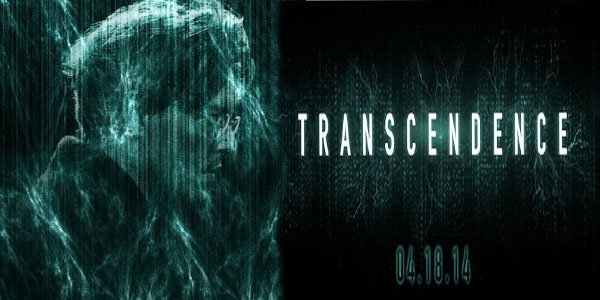 Sci-fi Thriller about a scientist who uploads his consciousness to the internet and threatens humanity with the next step of evolution.
This movie, starring Johnny Depp as the scientist Will Caster, starts as a promising Michael Crichton type warning of the danger of AI technology, but ends like a bad TV show about unbelievable eternal love with his wife Evelyn, played by Rebecca Hall, and a ludicrous non-battle with government armed forces of about ten men.
The first half of this movie is fascinating and thoughtful as the spectre of AI and Transhumanism is raised for debate. AI is Artificial Intelligence and it is the belief that consciousness as self-awareness can be achieved by a sufficiently complex machine such as a computer. In this view consciousness is simply a property of matter that “emerges” out of a complex system. In other words, when a machine or biological organism becomes sufficiently complex, it becomes self-aware and therefore conscious.
Transhumanism is a currently fashionable “movement” that believes we can transcend our humanity by hybridizing ourselves with machines such as computers. One such way of achieving transcendence is to upload our consciousness into a computer. Both of these beliefs are based upon the materialist assumption that there is no “spiritual” component or soulishness to humanity that transcends our material bodies. Consciousness is ultimately reducible to brain synapses and chemicals.
In this story, the antagonists are a Luddite type technophobic terrorist group who fears the tyranny of machinery to steal our humanity and ultimately control us as slaves. So they engage in terrorist attacks, which includes attempted murder of Will Caster, as one of the heroes of AI research. They don’t kill him right away, but the discovery of a radiation affected bullet means Caster will die in weeks. So he does the untested: He and his wife, with the help of Max Waters (Paul Bettany), do the first uploading of a human consciousness to a computer – Will Caster’s consciousness.
Max becomes the questioning character, our stand-in for the troubled person who sees the dangers but also sees the potential good that technology accomplishes. He becomes captured by the technophobe terrorists and soon joins them in their quest to shut down Al Gore’s wonderful internet.
But what soon becomes manifest is that when Caster’s consciousness is uploaded to the internet, he gets access to the world of information and “evolves” quickly into the god that he sought to become.
And this was the one thing I liked about an otherwise poorly executed movie. It illustrates the very universal nature of mankind to seek godhood. As Max says, “Survival isn’t enough.” AI Caster will seek to gain control of all information by his very nature, and ultimately end “primitive organic life” by replacing it with eternal machinery. This “next step of evolution” is clearly genocidal.
Early in the film, an anti-techy says to Caster, “So you want to create a god. To make your own god.” Caster replies, “Isn’t that what mankind always does?” And of course, the god that Transhumanism seeks to create is the godhood of the human. And this reveals the ultimate and inescapable religious nature of atheist humanism. That is, man is a religious being in need of worshipping the Creator God. But when he denies that god, he replaces it with himself, and he seeks to achieve eternal life through his own “transcendence,” of his finite humanity. But such godhood always requires control over the more “primitive humans” who do not agree with such enlightened wisdom. (Talk about a Scientific Inquisition). When the AI Caster gets his wife to buy a small town and build a huge scientific research center underground to expand his “power,” it is no coincidence that the town’s name is “Brightwood.” “Bright” is the nomer that the dull-headed new atheists have called themselves.
The film shows this religious atheism in full swing when Caster evolves in his intelligence to the point where he can use nanotechnology to heal people from their sicknesses almost instantly, like Jesus. In other words, “miraculous.” One of his healings is of a “man born blind,” which brings to mind the famous story of Jesus healing a man who was born blind in John 9. So he gets a following of such people to become his willing followers, who have become “networked” to Caster’s AI system and can operate independently, but can also act collectively as one. And the ultimate goal of such godlike power is expressed in creating life through 3D printing technology, which is what Caster seeks to do.
But the temptation for omnipotence with such “transcendence” becomes clear. And no matter what someone does in the name of “helping humanity,” absolute power corrupts absolutely, and so it does with Caster. But in a “nice” totalitarian way. He never becomes a “monster” like a Hitler, he just goes about his plans to abolish and replace human organisms in his amoral quest for so-called evolutionary perfection. It actually reminded me of C.S. Lewis’ That Hideous Strength, where the villain had the same goal of scientific purification of humanity. It is our Brave New World that appears to be amoral which is actually immoral in cloaking genocide in scientific terms of forcing a humanity that doesn’t know better, to become better against it’s own wishes. But of course, the better is defined by the one in power.
Paul Bettany’s character begins as a great foil as he struggles with the realization that he had believed all those years that consciousness was reducible to electrical brain impulses. And he then realizes that the illogic of human emotion can reconcile what a machine cannot reconcile. (Rather than “human emotion” the storytellers should have used morality to counter logic without restraint. This was a wasted powerful moral moment) He tries to get Evelyn to realize that whatever the AI Caster is, it is NOT Will Caster. It never was.

SPOILER ALERT: Unfortunately, then the movie breaks down into ridiculous plot elements and unbelievable character choices that makes it lose steam. Instant self-sacrifice by Evelyn occurs, which no matter how noble in itself, is not believable when it is not precipitated by a believable motivation and cuts against everything that was being shown in the character. The worst of it is the ludicrous government force that is marshaled to stop Caster’s little scientific complex that will rule the world. It was like 10 mercenaries, with a few canons lobbing shells onto the solar panels that powered Caster’s scientific paradise, and the pacifist mind-controlled followers of Caster who are accompanied by scary music but who never to do anything other than just walk up to the violent mercs and just look at them. It was so ridiculous, I was thinking, did they lose 10 million from their budget at the last minute, so they couldn’t do the big battle finale?
And then worst of all, this threat to the entire world is stopped by a little virus that worked instantly to make all the power in the world go dead, except for the lights in the underground complex until the good guys could get out. A little virus that this amazing AI that has evolved way past all computers in the world had no protection against. Just ridiculous.
Oh, no, wait, there was one more worst of all. After this entire story of proving that the “singularity” notion of humanity without limits leads to tyranny and destruction, it all ends with a contrary ending that negates everything before it. We are shown that the AI Caster “always was” Caster after all (thus reversing Max’s belief and reinforcing the discredited notion that consciousness is uploadable and reducible to 1s and 0s). But also the absurdly Romantic notion that “everything Caster did, he did so he could be together with his beloved wife.” Awwwww, he wasn’t a bad dictator, he was a loving dictator!
Such good potential story lost.
This movie proves that mankind should not transcend itself because we do not deserve godhood, and do not have the requisite goodness of nature to handle it. (No, we need a God for that). but it also proves that a poorly executed story can ruin an excellent idea.