OSCAR WATCH – Silence: Scorsese’s Epic Apostasy
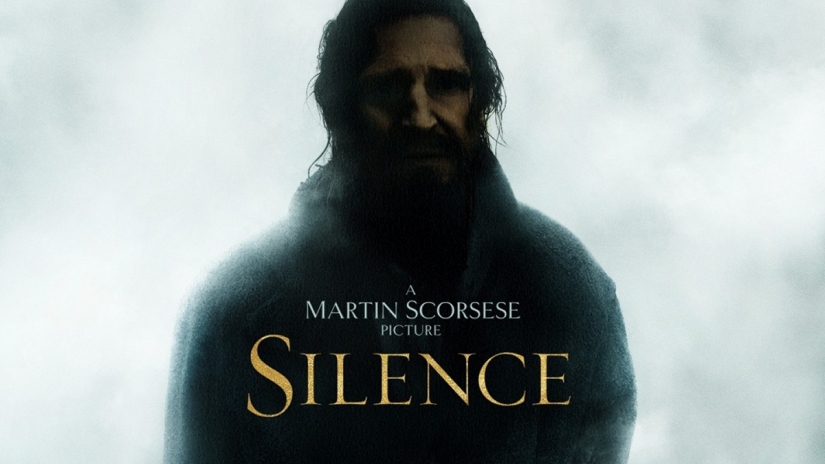
In the seventeenth century, two Jesuit priests face violent persecution to their faith as they track down their teacher and predecessor who is rumored to have apostatized.
I confess I have not read the book, so I do not know how faithful Scorsese is to Shusaku Endo’s original novel. But in movie adaptation, stories are shaped to the vision of the director, oftentimes subverting the original. So, despite some helpful appeals to the source material, a movie must nevertheless be understood in its own context and presentation apart from the book. And Scorsese seems to have made this story his own.
Christian Bashing is Nothing New
Silence is a timely and poignant, though at times overly long, exploration of the nature of faith in the face of persecution and suffering. For that reason, I applaud the discussion that Silence raises and the soul searching it inspires in the faithful.
Especially in this era of rising Christophobia and persecution of Christians by all forms of fascism worldwide. From the Muslim torturing and murdering of Christians in Egypt, Syria, Iraq and other Islamic nations, to the growing tide of violence directed at believers in America, hatred is being increasingly focused on Christians, not for being hurtful in their actions, but simply for believing in God’s Word. And such spiritual devotion is considered a hate crime by many in our culture.
The ultimate end of demonizing Christian beliefs as “racist, bigoted, homophobic, sexist, Islamophobic” and other phobias, is the justification of violence against Christians, the elimination of Christian cultural artifacts and history, and the suppression of the Judeo-Christian faith.
That is why Silence is so poignant at this time. Remember my mantra, movies are not made in a cultural vacuum. They often reflect the zeitgeist of the era, the spirit of the age they are made within. And this era no longer believes in freedom of thought and speech and the free exchange of ideas. It now says to Christians, “Shut up. Your beliefs are bigotry, so you must renounce them and outwardly support the zeitgeist.”
We are not in a post-Christian culture, we are in an anti-Christian culture.
But the trials and tribulations experienced by the Roman priests in this story are rooted in a deeper struggle that all honest believers wrestle with: the silence of God in the face of suffering, spiritual doubts, and weakness of faith.
Christian Lives Matter
The two priests begin their journey to Japan, a feudal country that has made Christianity illegal and killed off most of the Christians or forced them to apostatize. So the remaining believers are forced to hide their faith and worship in secret.
Roman Catholic hegemony in Japan creates the expression that apostasy takes in this Japanese Inquisition: Simply place your foot on an icon image of Jesus and you will live (or spit on a crucifix image). This stomping on the savior begins with individuals’ own lives, but evolves into a more complex moral dilemma.
The Roman priests in the country are forced to stomp on the icon images or many other of their parishioners will die. In so doing, the Japanese break the leaders, and the people follow in their apostasy.
The central moral spiritual question of the film becomes, would you renounce your faith in God to save a multitude of people? Willingness to die for one’s faith is one thing, but willingness to allow others to die for your faith is another.
And as the priests wrestle with God’s silence during their suffering, they conclude with a rather pragmatic conclusion that also reflects the zeitgeist of our era, a very dangerous view, which I’ll explain in a moment under the Spoiler Alert.
Look, suffering and persecution is no mere intellectual topic. It’s real, it’s existential, and to be honest, I can only pray I would have the steadfastness required to remain faithful to my God were I to face such a terror. God knows my weaknesses. In fact, in some ways, most of us could identify with the character in the movie who keeps stomping on the image to save himself, handing in Christians, and then asking for absolution from the priest in apparent genuine pathetic weakness. The guy betrays and repents so often, the audience laughs with a nervous uncomfortableness, for maybe he is the most like us of them all.
Is this not what the Roman system of confession offers, Indulgence? Is this not what Christianity offers? Forgive your brother seventy times seven?
And what’s the big deal of stomping on an image anyway? Can’t you continue to believe in your heart and therefore save lives? The Japanese even try to tempt them with the serpentine offer that it is only a formality. You don’t even have to stomp. Just touch it with your foot.
That’s what I like about the film, it caused me to ask myself the honest questions of my own faith, and weaknesses. It is easy to be a Christian when you are not suffering. Would such suffering refine and purge my own soul? I pray I never have to face that choice.
Spoiler Alert
Though one priest dies trying to save those martyred for his faith, the main character, Rodrigues, chooses to apostatize to save the lives of innocent Japanese. He concludes that their missionary activity has resulted in suffering for the people, not redemption “I’m just a foreigner who brought disaster,” says his apostate predecessor. This is the universal accusation by multiculturalists and other God-haters of all missionary activity. It’s a common theme in missionary movies going way back to At Play in the Fields of the Lord and others. (I write about this in my book, Hollywood Worldviews). It is the worldview of godlessness. Yes, Christians can be jerks and mistake some relative cultural conventions with absolute truths, but that doesn’t relativize all truth. There is transcendence in the Gospel. But not in the mind of a multiculturalist.
The most powerful moment of the movie is when Rodrigues is faced with his image to stomp in order to save others’ lives. The apostate predecessor priest tells him, “If Christ were here, he would have apostatized to save them.” Finally, God breaks his silence and Rodrigues hears a voice tell him, “It’s all right. Step on me.” This act, shot in excruciatingly emotional and literal silence, becomes “the most painful act of love that has ever been formed.”
And herein lies the soul of this movie, or its lack thereof.
Apostasy as an Act of Faith?
The movie seeks to equivocate the act of Christ’s sacrifice on the cross with an act of apostasy. Didn’t Jesus willingly accept the sins of mankind upon himself, like the stomping of our feet? Wasn’t Christ’s separation from the Father a kind of apostasy to save us from our sin? Just like stomping on the image of God saved the Japanese people?
Well, no, actually.
Jesus Christ does not ask us to stomp on him, he does not ask us or command us to sin, because it’s okay, he’ll forgive us. He forgives us despite our sins. Big difference. And it includes repentance, something the priests in the film never did. Jesus then says, “Go and sin no more,” not, “Come now, step on me, again.”
Christ’s separation from God was not apostasy, it was substitutionary atonement. The judge’s son took our guilty place in the electric chair. He paid for our crimes so justice could be fulfilled. The spiritual separation was caused by embracing the Father’s justice, not rejecting him.
Perhaps the movie Silence is not so different from Scorsese’s the Last Temptation of Christ, you know, the one that has Christ rejecting God and apostatizing himself. Do you see a pattern here? I would suggest that there is more autobiography in Scorsese’s filmmaking than his defenders can begin to understand.
Perhaps the way to understand this story is that it too fails to accept or understand transcendence. It seeks to root truth in the immanence of culture or survival, and so therefore, it values survival as the ultimate good, not God. If this life is all there is, then apostasy is justified in the name of saving lives.
Where in all this suffering is the responsibility of the torturers? Not once are we enjoined to consider their guilt in this story. It’s as if they are assumed as a given. If someone dies at the hand of an evil man, why is the believer blamed for their death? To say that people die because you will not renounce your faith is simply to shift the blame from the evil to the good.
It’s Original Blame Shifting from the Garden.
This is not the equivalent of lying to Nazis to save Jews. This is the equivalent of blaming the deaths of the Jews upon those who didn’t hand them in to the Nazis. The banality of evil is nothing compared to the irrationality of evil.
Unfortunately, the spirituality of this movie becomes a justification for apostasy in the name of saving human lives because it rejects the transcendence of God. Ironically, this is exactly what is being demanded legally of Christians now in our culture. Just shut up and go along with the culture. It recommends cultural resignation as the way to ease our pain. In this thinking, we Christians only have ourselves to blame for the suffering that cultural fascists inflict upon us. It creates Judases of us all.
The torture is coming later.
Godawa’s Quibble Corner
I don’t mean to trivialize the honest soul-searching of the story or diminish the true faith parallels, but I found the very Roman spirituality of the film to be part of its Achilles’ heel.
God explicitly commands us NOT to make images for worship in the Second Commandment (Deut. 5:8). So if I were given the opportunity, I would not merely step on the image of Christ, I would stomp on it as an idol condemned by God himself, burn it with fire and grind it to powder like Moses would (Exodus 32:20). Images are part of the problem, not the solution. Harder to sympathize with that. But within that system of thinking, the act of stepping on the image had become equated with rejecting God himself, so for those believers that act was expressive of apostasy. In that sense, I am more concerned about the justification of apostasy, however it is expressed, than the simple symbolic act.
But also, the belief of priestly confession as a requirement for forgiveness of sins imprisoned those Japanese people in fear and faithlessness as much as any Japanese Inquisition. To think that a human priest is required for forgiveness after our heavenly priest Jesus has secured the high priesthood is the worst sort of spiritual enslavement (Hebrews 4:14-5:10). The priest says in the film, that with his arrival, “finally, the people had priests to forgive their sins.” But in contrast, God says, “Since then we have a great high priest who has passed through the heavens, Jesus, the Son of God, let us hold fast our confession [and that ain’t confession to a priest].” (Heb 4:14).
The earthly focus on men instead of the direct connection to God is another expression of idolatrous immanence, ironically, more Buddhist than Christian. The movie seeks to equate apostasy with the incarnation of Christ, as if denying God is the same kind of thing Jesus did when he became flesh. But Christ did not reject the Father, he rejected his glory. Those are not analogous, they are radical opposites. Only the obfuscation of postmodern religious double talk can turn something into its opposite. It is perhaps here that the subversion of the Christian faith is the most egregious.
Even more ironically, after that very passage on Jesus’ high priesthood I just mentioned, the Bible talks about the eternal damnation of apostasy (Heb 6:4-7). The Bible has a very different view of apostasy than Silence. And it isn’t justified.
The apostle Paul, suffering for his faith wrote much on the topic.
2 Timothy 2:10–13
Therefore I endure everything for the sake of the elect, that they also may obtain the salvation that is in Christ Jesus with eternal glory. The saying is trustworthy, for: If we have died with him, we will also live with him; if we endure, we will also reign with him; if we deny him, he also will deny us; 13 if we are faithless, he remains faithful— for he cannot deny himself.
Being weak and faithless is not the same thing as denying God without repentance. Two different things in the text. The results here are clear, apostasy is not recommended or rewarded. And it is NOT a metaphor for incarnation.
And this is my biggest problem with the story. I have been researching the Neronic persecution of the first century church for my latest novel coming out in February, Tyrant: Rise of the Beast. And the actual Scriptural representation of persecution is much different than that presented in Silence. In fact, the movie is almost a mockery of God’s command to be faithful. At least a subversion of it.
My heart is filled with the humbled respect and admiration of those Christians in the Book of Acts, and in the first century who the apostles and elders admonished to remain faithful in the face of torture and death. To claim that their faithfulness is the cause of their own or others’ deaths is itself an abominable offense of blaming the victim for the crimes of their evil persecutors.
If Peter and Paul would only have shut their mouths and blended into their pagan culture, they might have saved thousands from the arena and expressed the love of God through their silent apostasy. NOT.
This is not a mere hypothetical. This is going on right now with Islamic terror. They murder Christians because we won’t renounce our faith and values and embrace Islam, and they [along with their Left Wing sympathizers] blame us for the terror. All the pseudo-intellectualizing and wordplay that supporters of the film engage in order to redefine apostasy as incarnation amounts to an insult to both early and modern martyrs. It trivializes their suffering.
Appeasing evil men never satisfies them, it only results in more evil.
In the movie, Scorsese attempts to make the priest’s end somehow noble, as his corpse clutches a symbol of a secret unlived faith on his funeral pyre. As if the symbol somehow negates his life of active betrayal to the end. But it really just illustrates the tragic fallacy of delusion in our modern world that tries to oppress Christians by forcing them to keep their beliefs entirely hidden and not to live them out.
In this way, Silence embodies the same illusionary meaning of the modern world that seeks to redefine truth as its opposite in all categories from morality to gender to science to history to truth itself. Apostasy is what the world, the flesh and the devil want. Apostasy in the name of faith is even better.
Sign up to get the news of when my novel comes out: I pray it is worthy of the martyrs, “those who had been slain for the word of God and for the witness they had borne. They cried out with a loud voice, “O Sovereign Lord, holy and true, how long before you will judge and avenge our blood on those who dwell on the earth?” Rev 6:9–10.