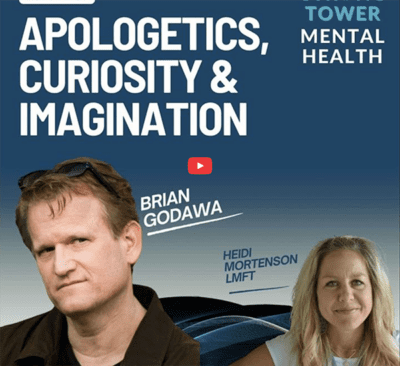
Apologetics, Imagination, and God: An interview with Brian Godawa
God uses so much creativity in the Bible. He uses parables, drama, pictures, and visuals. In fact, at most, only 20 to 30% of the Bible is propositional truth—the rational descriptions of doctrine. The other 70 to 80% is narrative, story, poetry, songs, creativity, and imagination. Yes, sound doctrine is vital, but if you want to truly understand God, there is a massive, wide-open revelation of Him that can only be accessed through the imagination. We have to stop reading the Bible merely as a textbook and realize we come to understand our Creator deeply through creative imagination.
When you study apologetics, you realize the power of reason, and you learn to spot logical fallacies. Technically speaking, a personal story is a logical fallacy of subjective experience. Yet, what does the Bible command us to do? Give our personal testimony. How many people have been saved through personal stories rather than intellectual debates? Logic and reason are crucial, but they don’t always connect with everything the human soul needs. If you are an intellectual type who doesn’t respect the imagination, you need to realize that logic alone falls short. The modern church doesn’t use its intellect enough, but we also severely neglect our imagination.
As a young artist, I thought if I could just create great works of art, I would leave something significant on the planet. But the reality of death punctured that for me. The fool and the wise man are both soon forgotten. If you achieve greatness by creating something good in the world, eventually, it will all be forgotten. If you don’t have God, the only eternal absolute you have is death—and in a very real sense, death becomes your God. Fame and cultural significance are not what we need; we need the God of that significance. Knowing my Creator is the true essence of redemption—not just in my heart, but in my imagination and my art.